TemPredict: AI-Driven Wearable Monitoring for Early Illness Detection and Warfighter Readiness
Published on March 13, 2026
TemPredict leverages wearable device data and artificial intelligence to identify early signs of illness, fatigue, and other health risks that can impact warfighter readiness. Developed by research teams at UCSF and UCSD, the program translates physiological and behavioral signals into actionable health insights, supporting detection of acute illnesses, chronic conditions, and mental health risks. Funded through the Defense Health Agency and supported by MTEC, TemPredict has achieved over 100 research milestones, influenced the wearable technology industry, and demonstrated the potential to enhance military readiness, reduce healthcare burdens, and enable proactive interventions for high-performance populations.
Project Highlight
The Problem:Maintaining warfighter readiness requires the ability to detect illness, fatigue, and other health risks before they degrade performance or operational capability. However, many physiological and behavioral changes that signal emerging illness or reduced readiness are difficult to detect early using traditional monitoring approaches.
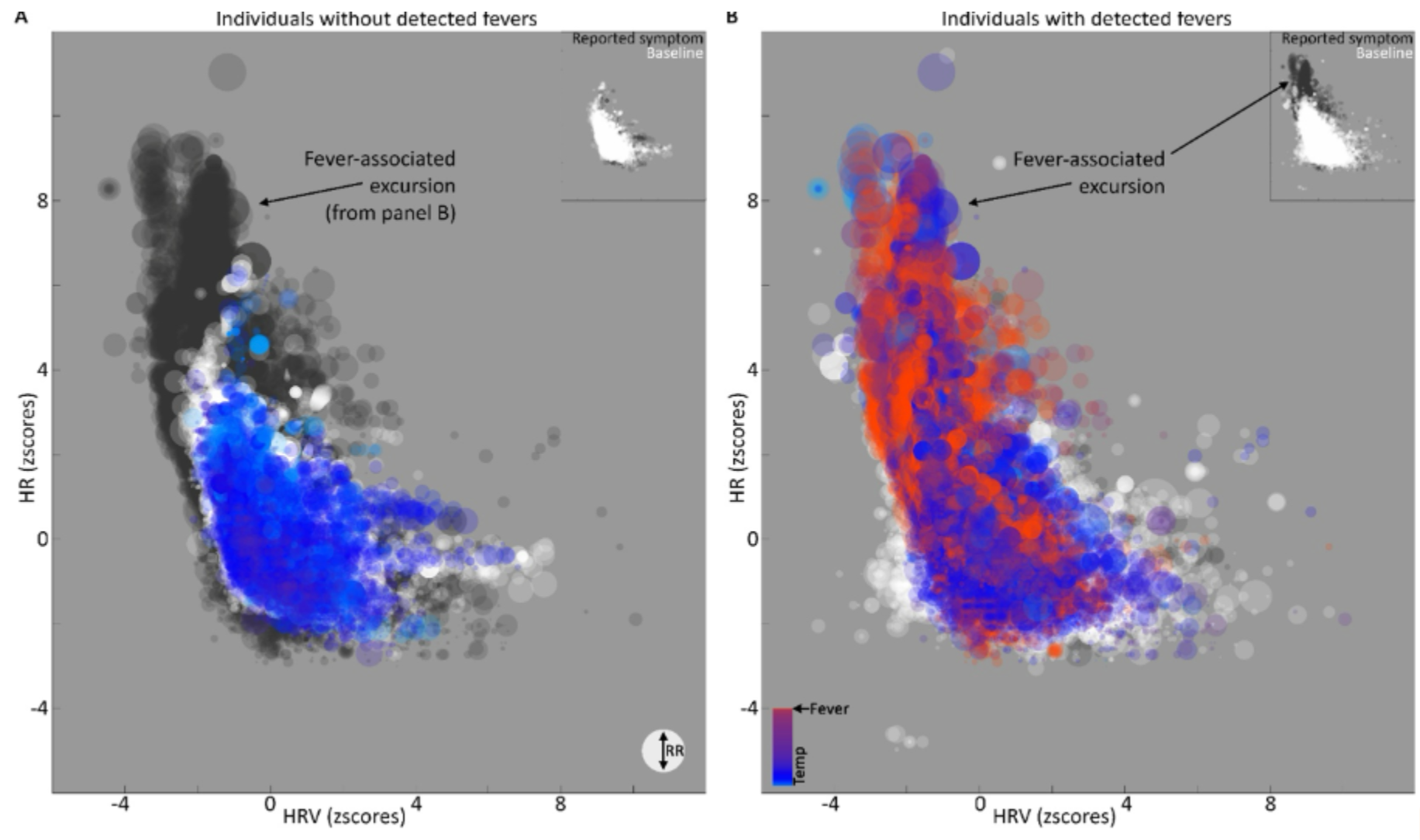
The TemPredict Study addresses this challenge by transforming data from wearable devices into early indicators of health and performance risk. The work has demonstrated that wearable-derived physiological signals can detect likely acute illnesses and assess risks for chronic conditions such as fatigue, inflammation, and diabetes. It has also extended these approaches to support the detection of behavioral and mental health conditions. Importantly, this study developed methods to ensure that these detection tools perform reliably across diverse populations, accounting for differences in age, biological sex, behavior patterns, and health conditions. By converting wearable device data into actionable insights, this technology can provide the U.S. military with a powerful tool to improve readiness, reduce healthcare costs, and identify individuals who may require early medical attention.
Solution & Progress: The TemPredict study is a collaborative effort between research teams at the University of California, San Francisco, and the University of California, San Diego. Together, these teams combine expertise in behavioral health, clinical trials, engineering, and artificial intelligence to develop advanced algorithms that translate wearable sensor data into meaningful health insights. This work is supported by the Medical Technology Enterprise Consortium (MTEC) award 20-12-COVID19-Diagnostics and funded through the Defense Health Agency (DHA).
The collaboration is led by Ashley Mason, PhD, a clinical psychologist specializing in behavioral health and clinical intervention trials, and Benjamin Smarr, PhD, a bioengineer focused on biologically inspired machine learning and health AI. This interdisciplinary approach allows the team to integrate clinical understanding with advanced engineering and computational modeling.
Since the initial study phases focused on acute illness detection, the program has achieved more than 100 research milestones and received three additional follow-on funding awards to expand into broader health risk prediction areas. The team has published 15 peer-reviewed scientific articles describing study outcomes, many of which have received national and international media attention.
Impact & the Role of MTEC: If fully implemented, approaches developed by Drs. Mason and Smarr’s teams could transform how wearable devices support health monitoring for military personnel and other high-performance populations. Early detection of illness and health risks can enable proactive intervention, improve operational readiness, and reduce the burden on military healthcare systems.
The TemPredict study results have already influenced the broader wearable technology ecosystem, with multiple wearable device companies incorporating illness-detection approaches inspired by this work. In addition, several government agencies have participated in monthly research briefings and have integrated insights from the study into their own wearable technology initiatives.
Scientific guidance and operational insight from the U.S. military have been critical in shaping the research direction and ensuring alignment with military readiness priorities. Meanwhile, the MTEC has provided essential grant management, financial oversight, and program coordination that have enabled the research team to maintain a sustained and successful development trajectory.
Featured Member

University of California San Francisco
UC San Francisco is a leading university dedicated to advancing health worldwide through preeminent biomedical research, graduate-level education in the life sciences and health professions, and excellence in patient care. With a commitment to public service, UCSF aims to innovate health care approaches for vulnerable populations and train the next generation of health professionals.
Visit Profile