High Resolution Optogenetic Therapy for Vision Restoration in Blinded Warfighters: University of Pittsburgh
Published on October 09, 2026
Through MTEC funding (22-02-MPAI), the University of Pittsburgh advanced optogenetic therapy designed to restore higher-resolution vision in Warfighters blinded by combat injuries. Building on pioneering clinical results, the project refined the technology needed to move toward future clinical trials and more meaningful vision restoration.
Project Highlight
The Problem
Eye injuries are among the most devastating and enduring wounds of modern warfare. In recent conflicts, combat ocular trauma has accounted for roughly 10 to 15 percent of combat injuries, and the vast majority are caused by explosions, including high energy fragments and improvised explosive device blasts. Severe injuries that destroy the light sensing photoreceptors of the retina can leave a Warfighter permanently blind, ending a military career and profoundly changing daily life after service.
Today, there are few options for restoring sight once photoreceptors are lost. Retinal prostheses can return limited light perception, but their resolution remains low. A therapy able to restore useful, high resolution vision would close one of the most significant gaps in the continuum of care for wounded service members and for the far larger civilian population living with blinding retinal disease.
Project Highlight
Through MTEC Award No. MTEC-22-02-MPAI-001, supported by the Department of War Military Operational Medicine Research Program (MOMRP), the University of Pittsburgh completed “Towards High Resolution Vision Restoration by Optogenetic Therapy,” led by Dr. José-Alain Sahel, Distinguished Professor and Chair of the Department of Ophthalmology at the University of Pittsburgh School of Medicine and Director of the UPMC Vision Institute.
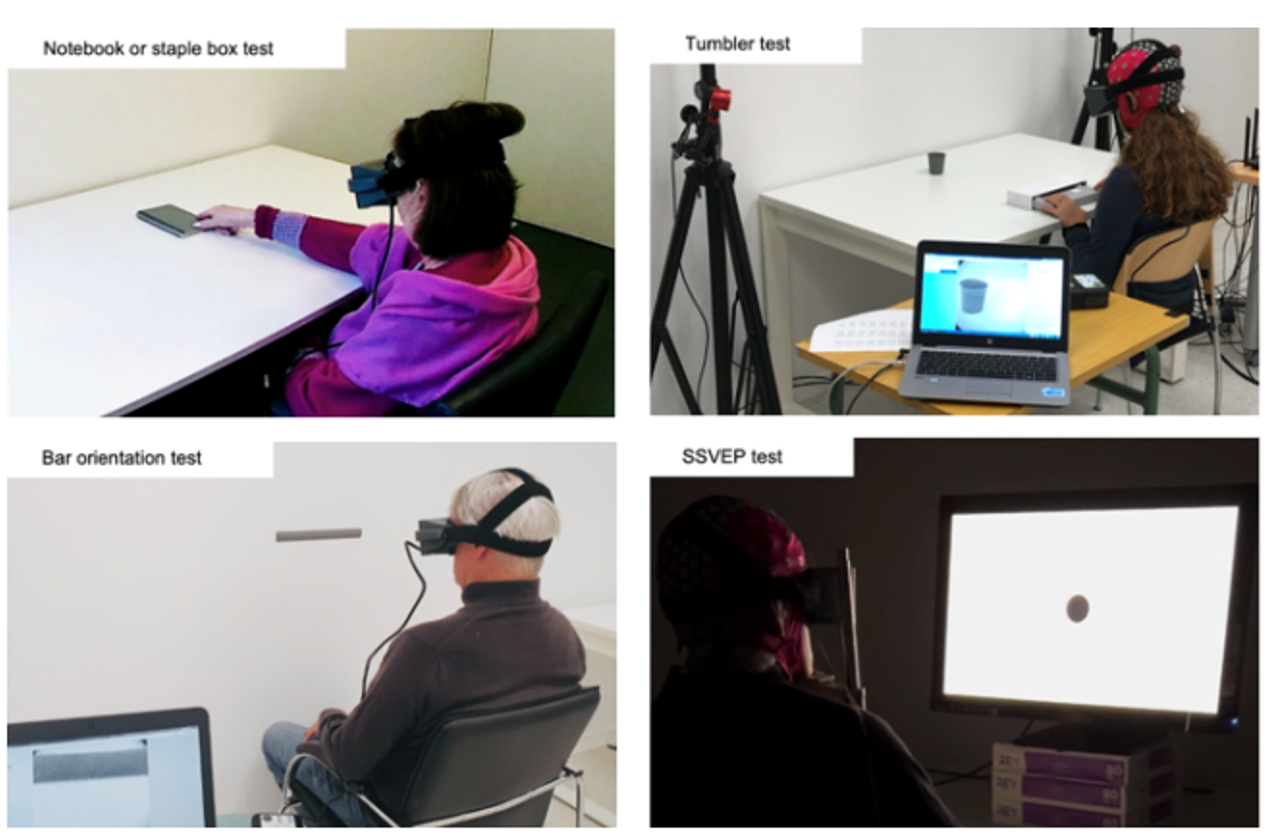
Optogenetic therapy uses gene delivery to make surviving neurons in the retina sensitive to light, allowing them to take over the role of photoreceptors lost to injury or disease. Dr. Sahel and his collaborators pioneered this approach in people: in 2021, their team reported in Nature Medicine the first partial recovery of visual function in a blind patient after optogenetic therapy. Working with specialized light stimulating goggles, the patient, who had been completely blind, was able to locate, identify, and count objects with the treated eye. This work earned Dr. Sahel and his longtime collaborator Dr. Botond Roska the 2024 Wolf Prize in Medicine. Most recently, in September 2026, the two received the António Champalimaud Vision Award, the world’s largest prize in vision research at EUR 1 million, recognizing more than two decades of fundamental, translational, and clinical work to restore sight by making surviving retinal cells responsive to light.
The scientific foundation of this approach received the field’s highest recognition on October 5, 2026, when the Nobel Prize in Physiology or Medicine was awarded to Karl Deisseroth, Peter Hegemann, and Georg Nagel for their discoveries concerning light gated ion channels and optogenetics. In announcing the prize, the Nobel Assembly highlighted efforts to restore sight in people with visual impairment as a key clinical application of the method, the very application Dr. Sahel’s team advanced under this award.
Building on these advances, the project set out to move optogenetic therapy from partial vision toward sharper, more useful vision. The long term plan has three stages, ending in a new clinical trial in patients. This MTEC award funded the first stage: refining the therapy in the laboratory so it is ready for that trial. The team worked in parallel on three goals:
Controlling coverage of the retina. The team used an injectable hydrogel matrix to control where and how broadly the therapy spreads across the retina.
Improving delivery efficiency and precision. The team developed custom engineered viral vectors and promoters to deliver the therapy more efficiently and to target the intended retinal cells more specifically.
Optimizing stimulation. Using computer generated holography and stimulation modeling, the team designed a three dimensional stimulation approach that mimics the activity pattern of a healthy retina.
Impact & the Role of MTEC
MTEC funding enabled the University of Pittsburgh to address a high consequence, long term readiness and quality of life challenge for injured Warfighters. Because optogenetic therapy works independently of the specific cause of photoreceptor loss, a single high resolution platform could serve service members blinded by combat trauma and patients with inherited retinal degenerations alike. With this first stage complete, the program is positioned to move toward clinical testing, bringing the Department of Defense closer to a restorative, rather than purely supportive, option for vision loss.
The dual use potential is substantial. Retinal degenerative diseases such as retinitis pigmentosa and age related macular degeneration affect millions of people worldwide, and advances made for wounded Warfighters could open a path to restored sight for veterans and civilian patients who currently have no effective treatment.
References
1. NobelPrize.org. The Nobel Prize in Physiology or Medicine 2026: Popular Information. https://www.nobelprize.org/prizes/medicine/2026/popular-information/
2. Ophthalmology Times. 2026 Nobel Prize in Physiology or Medicine Awarded for Optogenetics Discovery. October 2026. https://www.ophthalmologytimes.com/view/2026-nobel-prize-in-physiology-or-medicine-awarded-for-optogenetics-discovery
3. University of Pittsburgh Center for Military Medicine Research. Towards High Resolution Vision Restoration by Optogenetic Therapy. https://www.cmmr.pitt.edu/projects/towards-high-resolution-vision-restoration-optogenetic-therapy
4. Sahel JA, Boulanger-Scemama E, Pagot C, et al. Partial recovery of visual function in a blind patient after optogenetic therapy. Nature Medicine. 2021;27:1223-1229. https://doi.org/10.1038/s41591-021-01351-4
5. Pittwire, University of Pittsburgh. For the First Time, Optogenetic Therapy Has Partially Restored a Patient’s Vision. May 2021. https://www.pittwire.pitt.edu/pittwire/features-articles/first-time-optogenetic-therapy-partially-restores-patient-s-vision
6. GlobeNewswire. World’s Largest Vision Award Goes to Botond Roska and José-Alain Sahel. September 15, 2026. https://www.globenewswire.com/news-release/2026/09/15/3362551/0/en/world-s-largest-vision-award-goes-to-botond-roska-and-jos%C3%A9-alain-sahel.html
7. Pittsburgh Jewish Chronicle. Pittsburgh’s José-Alain Sahel Honored with Wolf Prize for Groundbreaking Research on Sight Restoration. July 2024. https://jewishchronicle.timesofisrael.com/pittsburghs-jose-alain-sahel-honored-with-wolf-prize-for-groundbreaking-research-on-sight-restoration/
8. U.S. Army. Eye Doctors Teach Combat Trauma Management. 2013. https://www.army.mil/article/98802/Eye_doctors_teach_combat_trauma_management
Featured Member

University of Pittsburgh
The Center for Military Medicine Research (CMMR) at the University of Pittsburgh is dedicated to advancing medical research for wounded service members and their families. The center focuses on trauma, emergency, and critical care, leveraging the university's strengths in medical and engineering fields, and collaborating with Carnegie Mellon University's robotics and AI expertise. CMMR aims to enhance trauma care for warfighters and civilians, contributing to the defense innovation economy.
Visit Profile